20 Sep 2026 · Chirag Asnani
Fed Hikes: India Feels the Squeeze
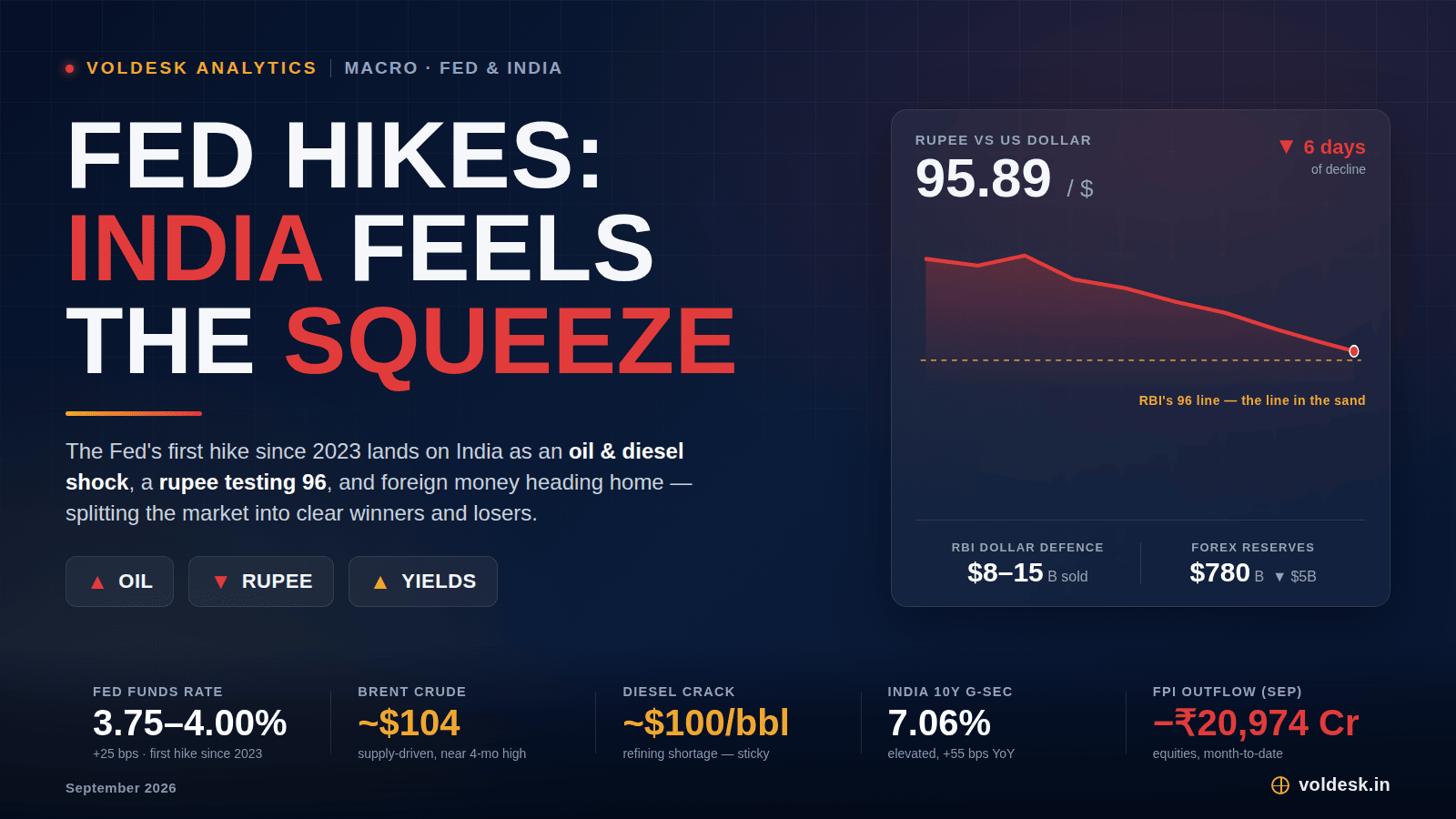
On September 16, 2026, the Federal Reserve raised its target range by 25 basis points to 3.75% – 4.00% — its first hike since 2023. The trigger was inflation that refused to cooperate: August CPI ran 3.4% year-on-year as crude crossed $100 a barrel. Chair Warsh was blunt — "inflation is too high" — and the dot plot backed him, with 16 of 18 members now pencilling in one more hike this year. This was not a one-and-done gesture, and for India it arrives as a shock through oil, diesel, and the rupee.
The crude oil problem is a supply problem, not a demand problem
The oil move is a supply problem, not a demand one. The escalation with Iran and the disruption around the Strait of Hormuz — the artery for a fifth of the world's seaborne crude — have put a permanent risk premium into every barrel, keeping Brent near $104. That is the worst kind of inflation for a central bank: rates cannot manufacture crude, reopen a shipping lane, or end a war. So oil-led inflation forces the Fed's hand while offering no clean way to win — and the market now treats every geopolitical headline as a rate-hike headline.
The diesel problem is worse, and it will outlast the crude spike
Even if crude cooled tomorrow, India's fuel bill would stay high — because the real bottleneck is refining, not crude. The diesel crack spread, the premium of diesel over crude, has blown out toward $100 a barrel, a sign the shortage sits downstream in the refineries. And the causes are structural. A wave of refineries shut permanently during COVID, with almost no new capacity replacing them; on top of that thin base, Russian refining has been repeatedly knocked offline by Ukrainian drone strikes and Middle Eastern refining has taken war damage. Global middle-distillate inventories have drained to levels not seen since the 1950s, even with US refiners running flat out.
This is why it lasts longer than we imagine: you cannot build a refinery in a quarter, and in an energy-transition world few want to fund a new one at all. The diesel premium is not a spike that mean-reverts in weeks — it is a new floor. For India, which imports most of its crude and runs its trucks, tractors and gensets on diesel, that feeds straight into freight, food logistics and factory costs. It is imported inflation with a long tail.
Indian equities and the RBI's impossible choice
The hike hits India through two channels at once. Higher US yields — the 10-year briefly touched a 19-year high above 5% — pull foreign money out of emerging markets; FPIs have already withdrawn a net ₹20,974 crore from Indian equities in September. At the same time, dearer oil widens the import bill. Both push the rupee down: it has slid to around 95.89, and the RBI is defending the 96 line hard — deploying an estimated $8–15 billion through state banks in a week, with forex reserves down nearly $5 billion to $780 billion.
| Indicator | Level | What it signals |
|---|---|---|
| US Fed funds rate | 3.75 – 4.00% | +25 bps; first hike since 2023 |
| US 10-Yr Treasury | ~4.94% | Touched a 19-year high above 5% |
| Brent crude | ~$104 | Supply-driven, near 4-month high |
| Diesel crack spread | ~$100/bbl | Refining shortage — structural, sticky |
| Rupee (USD/INR) | 95.89 | RBI defending the 96 line |
| India 10-Yr G-Sec | 7.06% | Elevated, +55 bps over the year |
| RBI repo rate | 5.25% | Neutral stance; next MPC Oct 5–7 |
| FPI equity flow (Sep) | −₹20,974 cr | Month-to-date outflow |
Levels as of the week ending September 19–20, 2026.
That is the RBI's dilemma at its October 5–7 meeting. It can let the rupee fall — cushioning exporters but making imported oil costlier and risking a disorderly slide — or defend it by raising rates above the current 5.25% to hold the yield gap over the US, which tightens credit into a slowing economy. India's own 10-year yield is already elevated at 7.06%. The currency and the bond market are pulling in opposite directions, and the RBI cannot satisfy both.
The pain lands hardest on capital-hungry industries
When money gets dearer everywhere, the businesses that live on debt feel it first. Capital-intensive sectors — infrastructure, real estate, power, capital goods — fund long-lived projects with borrowing that now resets higher; a project that worked at 8% may not survive at 9–10%, so capex is deferred and order books thin. Real estate is doubly hit: costlier home loans cool housing demand while developers' own funding costs climb. Auto demand softens as EMIs rise, and richly-valued growth names de-rate as a higher discount rate shrinks the value of distant earnings.
Banks and NBFCs: the NIM squeeze
Financials look like winners when rates rise, but timing is the catch. Deposit costs reprice fast as banks compete for funds, while a large share of loans is fixed-rate or reprices with a lag, and weak credit demand caps how far lending rates can be pushed. When funding costs climb faster than loan yields, the net interest margin (NIM) erodes. NBFCs are more exposed still — they borrow wholesale, so higher G-sec yields hit their cost of funds directly — and higher EMIs raise the risk of defaults. The sector that looks rate-positive on paper can see profitability quietly compressed.
The other side of the trade: where a weak rupee actually helps
Not every sector is a victim. The same rupee weakness that hurts importers is a tailwind for exporters who earn in dollars and spend in rupees. IT services benefit mechanically — every rupee of depreciation flows almost directly to margins. But this is a margin story, not a growth one: demand and revenue growth in IT remain weak, with soft client spending and thin deal pipelines. A weak rupee can drive a near-term bounce, but it does not fix the underlying problem — so the improvement is optical and the fundamentals stay soft. Pharma and specialty chemicals gain similarly from earning abroad, though pharma carries its own US-pricing and regulatory risk.
Then there are the defensives. FMCG staples — soap, food, personal care — are bought whether rates are at 5% or 6%, so demand is sticky and rate-insensitive, exactly what investors reach for when the cycle turns. The caveat is margins: crude-linked input costs and high freight bite, and rural demand is sensitive to food inflation. But the offset is valuation.
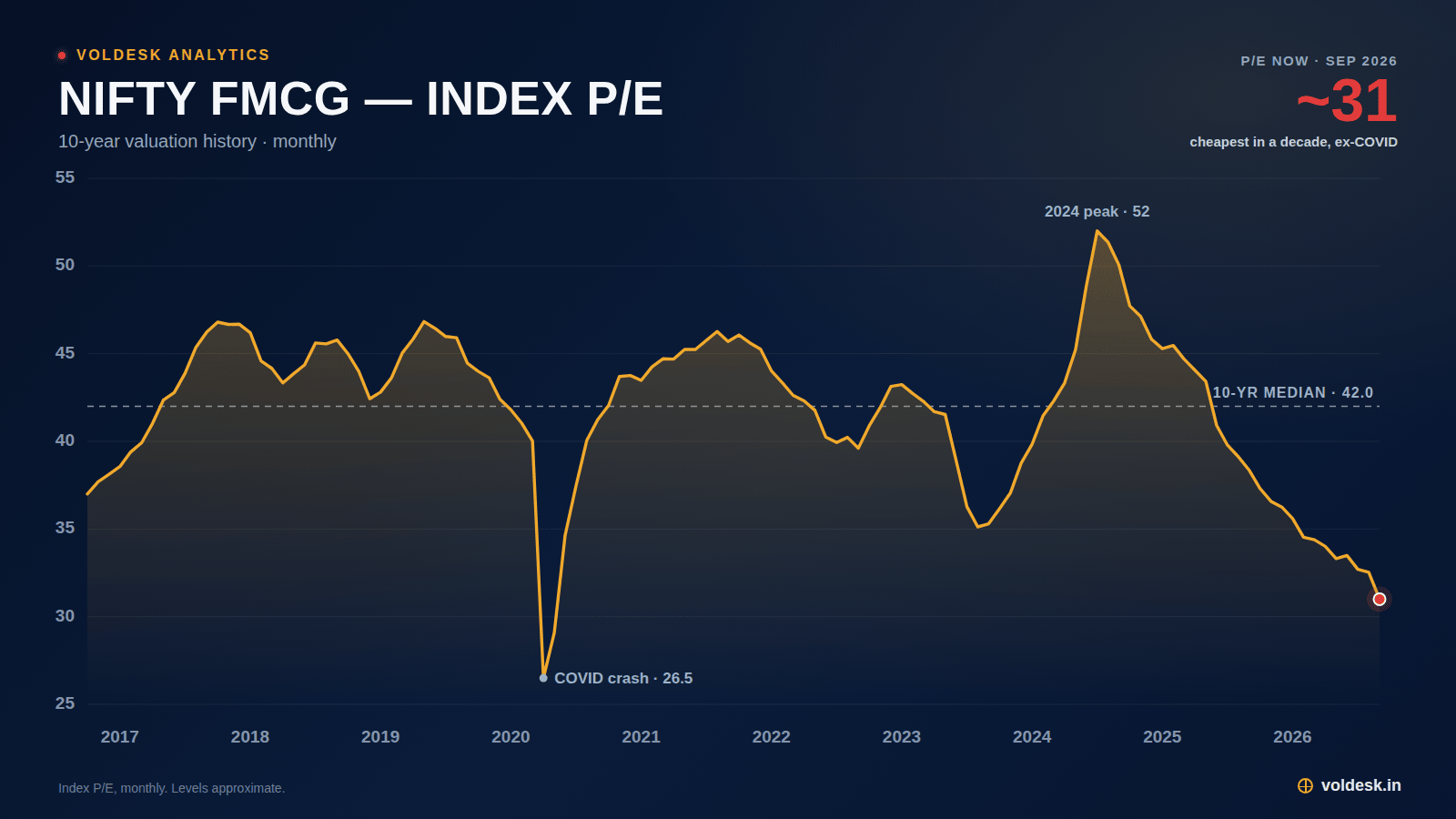
After two flat years, the Nifty FMCG P/E has fallen to roughly 31 against a 10-year median of 42 — its cheapest in a decade outside the 2020 COVID crash. Much of the bad news is arguably in the price already. Resilient demand plus undemanding valuations is why staples tend to hold up better in a rising-rate, risk-off phase.
The sector scorecard
- Relatively better placed: IT services and dollar exporters get a rupee-driven margin tailwind and possible near-term bounce — but IT's weak demand and revenue growth keep its fundamentals soft, so this is relief, not a turnaround; pharma and specialty chemicals (export earnings); FMCG and consumer staples (sticky demand, defensive, cheapest valuations in a decade ex-COVID).
- More exposed: real estate and capital goods (high leverage, deferred capex); autos and other EMI-driven demand; NBFCs and banks (NIM compression); richly-valued high-growth names (de-rating as discount rates rise).
The bottom line
The Fed's hike is a symptom of a deeper problem — a supply-driven energy shock monetary policy cannot fix. For India it lands as a triple hit: costlier oil, a sticky diesel premium, and foreign money heading home. But the pain is not uniform. It rewards the dollar earners and the defensives while squeezing the leveraged and the rate-sensitive — and the RBI's October decision will be less about the right answer than the least damaging one.
Keep reading

09 Sep 2026
Rentomojo: India's First Listed Rental Play — Good Company, Fair Value?
For the first time, Indian public markets get to price a furniture-and-appliance rental platform . Rentomojo Limited opens its ₹1,256 crore …

09 Sep 2026
Tempsens: The Manufacturing-Leader Premium, Already Priced In?
Tempsens Instruments (India) priced its IPO at ₹300 — roughly 35x earnings — listed on 28 August 2026 and closed its first day at ₹586.65 , …
30 Aug 2026
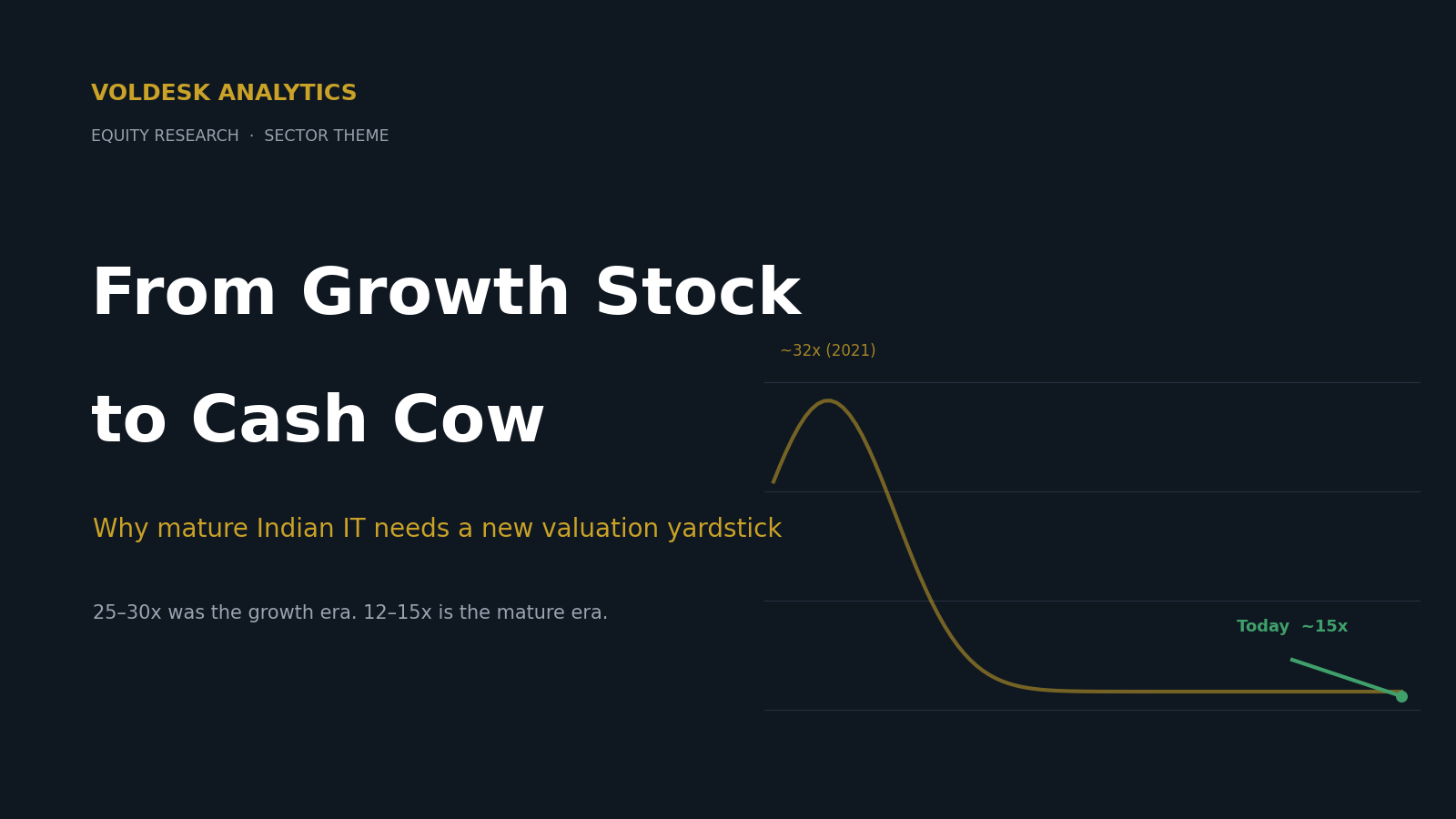
Indian IT: From Growth to Cash Cow
For fifteen years, Indian IT services was the market's dependable growth machine, and investors paid for it accordingly. Through most of the…
Disclosure — No security recommendation. Macro commentary. This article is for information and education only and does not constitute personalised advice. Investments in securities are subject to market risk; no returns are assured.